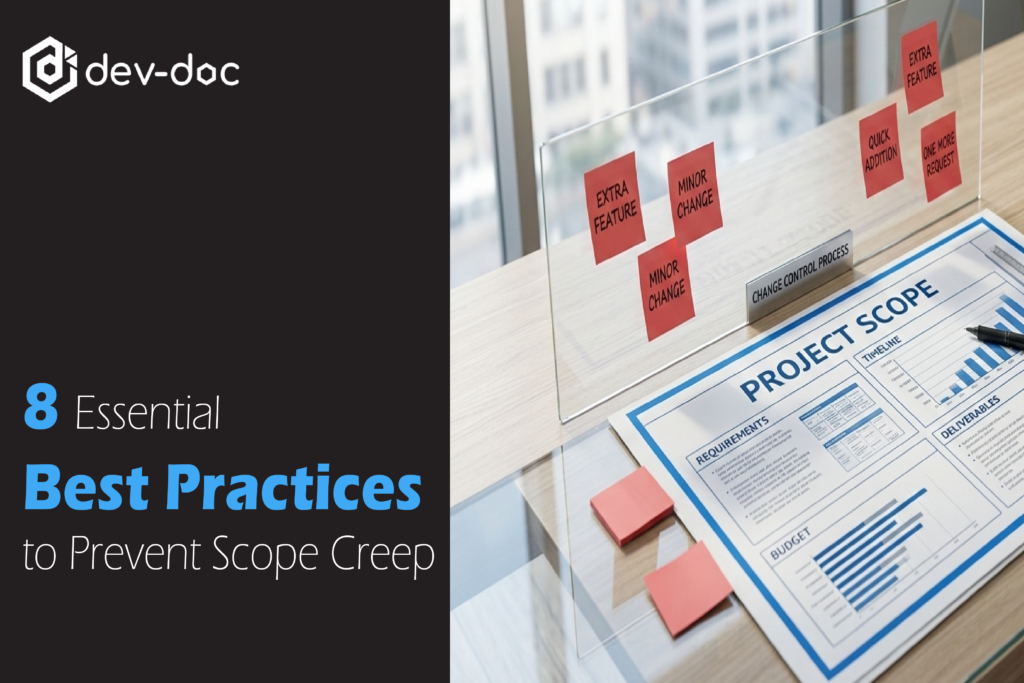
Scope creep occurs when new requirements, tasks, or features are added to a project after its scope has been finalized without any evaluation or approval, escalating costs, delaying deadlines, and burdening teams.
It typically arises from:
- Stakeholders introducing extra features
- Poorly defined initial scope
- Uncontrolled changes mid-project
- Lack of documentation or formal processes
- Miscommunication between teams
The good news? Scope creep is preventable.
In this article, we’ll explore some effective best practices to prevent scope creep.
Let’s dive in.
1. Define a Clear Project Scope from the Start
The most effective approach to preventing scope creep is to start with a well-defined project scope. This means documenting key points like Key deliverables, Requirements, expectations, Project timelines, and Budget constraints. Here are a few tips for a strong scope document:
- Use specific, measurable language.
- Avoid vague terms like “might,” “could,” or “some.”
- List what’s included and what’s excluded.
- Align scope with stakeholder expectations.
A clear scope document becomes the baseline against which every future request is evaluated.
2. Involve Stakeholders Early and Often
One common cause of scope creep is stakeholders being left out of early planning, only to request changes later. You can take the following steps to prevent scope creep:
- Include all key stakeholders in initial discussions.
- Get agreement on priorities and project boundaries.
- Review the scope regularly with stakeholders.
Regular stakeholder engagement ensures everyone understands what’s in scope and reduces unexpected requests later.
3. Establish a Strong Change Control Process
Not all changes are bad; some of them might be necessary. However, you can follow this approach to manage these changes effectively:
- Submit a change request detailing the proposed change.
- Assess impact on time, cost, quality, and resources.
- Review by decision-makers
- Approve or reject formally.
- Update project plan and communicate changes.
A structured approval mechanism ensures changes aren’t added spontaneously or without consideration.
4. Set Priorities Using a Framework
Prioritization helps your team and stakeholders agree on what’s essential versus optional. Using tools like MoSCoW helps in prioritizing changes such as must have, should have, could have, and won’t have. Prioritization prevents low-value features from slipping in under the radar.
- Must Have: Critical functionality
- Should Have: Important but not essential
- Could Have: Nice to include if possible
- Won’t Have: Explicitly excluded
This clarity makes it easier to say “no” when needed.
5. Document Everything
Lack of documentation is one of the biggest causes of scope creep because when decisions aren’t written down, memory and assumptions take over. AI-powered tools like Dev-Doc allow you to generate documents quickly and efficiently.
Essential documentation you should always maintain:
- Scope statement
- Change request logs
- Requirement specifications
- Meeting minutes
- Versioned plans
The moment a requirement or decision is documented, it creates accountability.
6. Use Project Management Tools
Modern project management tools like Jira, Asana, Trello, and Microsoft Planner help your team to
- Track tasks and changes
- Maintain histories of updates.
- Visualize scope boundaries
- Automatically document changes
These tools provide transparency and reduce informal requirements slipping into the project.
5. Break Projects into Manageable Phases
Controlling a project becomes harder when the project is large and monolithic. Breaking work into phases or iterations, such as in Agile frameworks, creates natural checkpoints where scope can be evaluated and controlled. This approach also provides you with other benefits like,
- Frequent feedback loops
- Better visibility into progress
- Easier to handle or accommodate changes in future phases
7. Communicate Clearly and Consistently
Poor communication often results in misunderstanding and unwarranted changes, causing scope creep. To prevent scope creep, your team should establish:
- Regular check-ins
- Clear channels for updates
- Dashboards or status reports
- Shared project tools
Final Thoughts
Preventing scope creep is about discipline. It is important to understand what the project is meant to accomplish, agree on how changes are treated, and communicate openly and honestly throughout. The best practices outlined here help you to create a disciplined environment where projects can thrive.
AI-powered tools like Dev-doc elevate the overall documentation process, making it easier to create, maintain, and update documentation that stays in sync with your project progress.
In the end, preventing scope creep isn’t about saying “no.”
It’s about saying “yes; with structure, boundaries, and intention.”
If you still have any questions or require any additional support. Feel free to contact us anytime.